Last updated 2026-08-18
TL;DR
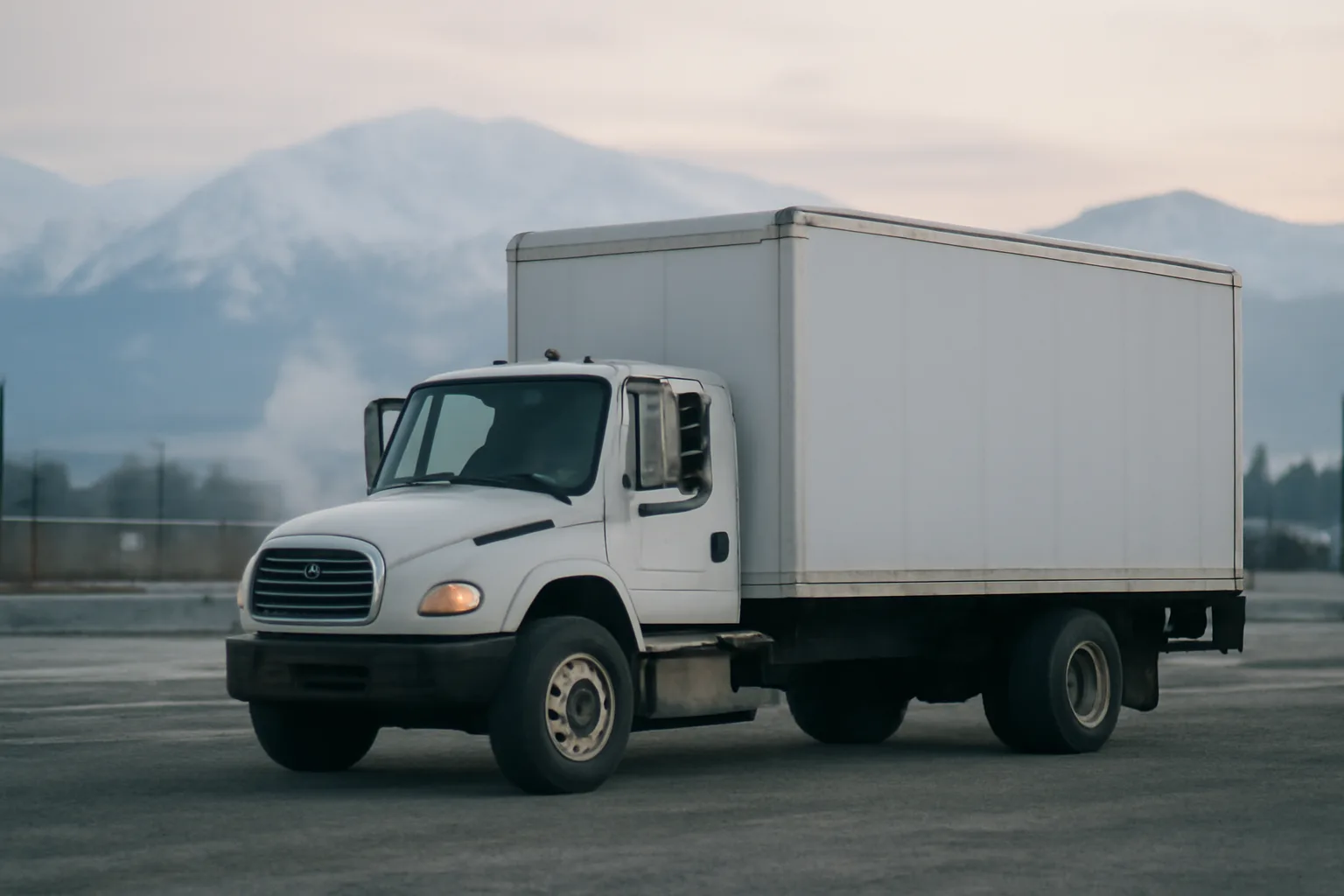
Starting mobile shred in Alaska is simpler than most states because Alaska imposes no paper-shred-specific license. You need a standard state business license ($50-$200), local permits, NAID AAA Certification for client trust, and a truck with an onboard industrial shredder. Realistic startup cost is $85,000 to $200,000. Paper path: business license, NAID cert, insurance, truck, shredder. No fabricated approval timelines.
Do you need a license for mobile shred in Alaska?
No. Alaska does not issue a paper-shred operator license. There is no shred-specific permit at the state level. What you do need is an Alaska Business License from the Department of Commerce, Community, and Economic Development. That license covers the legal right to operate a commercial service in the state. [1]
The Business Licensing Section confirms: "Any person or entity conducting business in the state must obtain an Alaska Business License." [1] That is the primary state-level paper requirement. Alaska Statute AS 43.70.020 requires it. The license costs $50 per year if you apply online, $75 on paper, and up to $200 for some professional categories. A mobile shred operation typically falls under the general services category at $50/year. [2]
Local municipalities can add their own requirements. Anchorage, for example, requires a separate city business license. Check with the clerk's office where you will park the truck and base the business. Some boroughs may require a home occupation permit if you run administration from a residence. No local shred mandate exists either. This is not California or Texas. Alaska wants your tax ID and your fee.
The Clean Water Act touches you lightly. Mobile shred trucks generate no process water, so you generally do not need a state wastewater discharge permit. Alaska Department of Environmental Conservation confirmed that dry industrial operations like mobile paper shredding are not a priority discharge source. [3] Still, ask DEC directly before you assume: (907) 269-7503.
Environmental paperwork for the shredded material itself is modest. The bales of shredded paper you sell to recyclers or mills count as a product, not a waste. If you dispose of contaminated paper (food, oil), it's solid waste. You need a local solid waste hauler permit only if you haul it yourself to a landfill. Most shred operators sell the shreds to a broker who handles transport. You skip the hauler permit that way.
Driver and vehicle licensing is standard DOT stuff. A commercial truck over 26,000 lbs gross vehicle weight rating (GVWR) requires a Commercial Driver's License (CDL). Most purpose-built mobile shred trucks are over 26k GVWR. So you likely need a CDL, a DOT medical card, and a USDOT number if you cross state lines. [4] The Alaska DMV issues CDLs under federal standards (49 CFR Part 383).
What state registration and tax steps come first?
File before you shred. Step one: pick a business structure. Most solo operators start as an LLC. Alaska LLC formation costs $250 filing fee (Articles of Organization) plus a $100 biennial report fee. [5] You file with the Division of Corporations, Business and Professional Licensing. The LLC protects personal assets from business liability. A sole proprietorship puts your truck and house at risk if a client sues over a data breach. Do not skip the entity step.
Step two: get a federal Employer Identification Number (EIN) from the IRS. Free, instant online. You need it to open a bank account and file taxes. No EIN, no vendor accounts with fuel cards or paper brokers.
Step three: register with the Alaska Department of Revenue for tax purposes. If you sell the shredded paper as a commodity, some brokers issue a 1099; the revenue department wants its cut if the sale is taxable. Alaska has no state sales tax, which simplifies invoicing. [6] You do not collect or remit state sales tax. Some local boroughs charge a transient occupancy or excise tax, but those hit lodging and alcohol, not paper shredding services. Confirm with your specific borough.
Step four: workers' compensation. If you hire one employee, Alaska law requires workers' comp coverage from day one. You buy it from a private carrier or the state assigned risk pool. [7] The state Division of Workers' Compensation enforces it. The fine for non-compliance starts at $1,000 per day. If it's just you and your spouse, you can exempt yourselves. Cover any non-family employee. No exception for part-timers.
Step five: vehicle registration. If the truck lives in Alaska, register it at the DMV. Heavy trucks pay fees by weight class. A 33,000 lb GVWR truck costs roughly $300-$500 for annual registration. [8] You also need commercial auto insurance. A $1 million combined single limit policy is the minimum half-serious commercial landlords and brokers will demand. Expect $3,000-$6,000 annually. At this point you're legal to turn the key, but not yet a shred business.
How much does mobile shred cost in Alaska?
For clients, mobile shred in Alaska runs $35 to $85 per banker box, with most jobs billing at a $100-$150 minimum plus volume overage. [9] The range comes from distance, fuel, and whether the truck crosses from Anchorage to Wasilla or from Juneau to a ferry-served island. Rural and off-road-adjacent jobs run higher. A 10-box purge from a medical clinic in Fairbanks might invoice $450-$600. A 40-box office move in Anchorage might invoice $1,100-$1,600 at $35-$45/box.
For you, the startup cost of a mobile shred truck is the conversation opener. A new truck with an onboard industrial shredder from a builder like Shred-Tech or Vecoplan costs $140,000-$180,000 delivered. [10] A used truck with 5,000-7,000 hours is $60,000-$90,000. If you buy a bare truck and mount a used shred unit, you might land at $50,000, but you take the integration risk: hydraulic plumbing, power take-off, bin lift install. That path is not for a first-timer without mechanical help.
| Cost Component | Low (used truck) | High (new truck) |
|---|---|---|
| Truck + shredder + PTO install | $65,000 | $175,000 |
| Alaska business license (1 year) | $50 | $75 |
| LLC formation + biennial report | $350 | $350 |
| NAID AAA Certification Kit + fees | $149 + $1,500-$2,500 auditor | $149 + $2,500 auditor |
| Commercial auto insurance (1 year) | $3,500 | $6,000 |
| General liability + umbrella (1 year) | $1,200 | $2,500 |
| Worker's comp (1 employee) | $2,000 | $3,500 |
| Fuel + maintenance reserve (year 1) | $8,000 | $12,000 |
| Marketing + website + fuel cards | $3,000 | $5,500 |
| Total approximate | $85,000 | $200,000 |
Table 1: First-year Alaska startup cost estimate (1 truck, Anchorage base)
The NAID AAA Certification Kit from ShredPath bundles the policy templates and audit-prep checklists that get you through the compliance paper. The kit is $149, one-time, but you also pay an independent NAID-approved auditor $1,500-$2,500 to do the physical audit. Most Alaska operators pursue NAID AAA within the first 6 months because hospital and bank RFPs require it.
Ongoing costs per month: fuel ($800-$1,800, depends on mileage), shredder knife replacement ($400-$800 amortized), truck maintenance ($500), insurance ($500-$800), and if you have one employee, payroll ($3,500-$4,500). Gross margin before owner pay: 55-70% after direct job costs. A single truck doing 25-35 boxes per day, 5 days a week, at $45 average per box, grosses $5,600-$7,900 per week, or about $290,000-$410,000 a year top-line. Alaska's small population means you fight for volume. A state with 730,000 people does not fill a shred truck like Texas does. Route density is your biggest profit lever.
What certifications actually matter in Alaska?
NAID AAA Certification is the only one that gets you past a hospital procurement desk or a bank compliance officer. NAID (National Association for Information Destruction) verifies your truck, your process, your employee screening, and your shred size standard (1mm x 5mm or smaller for paper, per NAID AAA specs). [11] Without it, you cannot honestly respond to RFPs that demand "NAID AAA Certified." Alaska Regional Hospital and Mat-Su health clinics include it in their vendor agreements. The certification is unannounced-audit: an auditor shows up, watches a job, checks your locked bins, your shred screen, your employee background check files, and your destruction certificate template.
HIPAA compliance is not a certification you "get" from a government body. It is a legal obligation if you touch protected health information (PHI). As a shredding service for medical clients, you are a Business Associate under HIPAA. That requires a Business Associate Agreement (BAA) with each covered entity, plus administrative, physical, and technical safeguards for the PHI on the paper you collect. [12] The NAID AAA audit covers the physical and administrative pieces. Many operators use the ShredPath NAID + HIPAA Cert Kit to build their policy binder and BAA template before the auditor arrives. The kit generates the documents; you execute them. No cert kit replaces legal advice.
FACTA (Fair and Accurate Credit Transactions Act) Disposal Rule applies if you shred consumer credit reports or background check files for employers. It requires "reasonable measures" to destroy the information. [13] NAID AAA meets that standard. You do not get a FACTA certificate. You just follow the rule. Any Alaska shred company that handles business records should meet FACTA disposal standards. The risk is theoretical until a data dump makes the news.
PCI DSS (Payment Card Industry Data Security Standard) matters only if you shred cardholder data for merchants. You don't store it. The merchant is responsible. You shred it. Still, mention PCI DSS in your marketing if you target retail clients. But the paper you create is the audit report from NAID. That's the cert that prints money.
How do you get your first clients in an Alaska market?
Start with the medical roster. Alaska has roughly 25 hospitals, 180+ clinics, and small tribal health facilities. Every one of them generates PHI on paper. Call the practice manager, ask if their current vendor has missed a pickup. Alaska operators report that competitors from the Lower 48 sometimes skip weeks due to weather and logistics. Reliability is your wedge.
Second, target law firms. Anchorage has 500+ attorneys. They bill high and destroy files on retention schedules. Pitch $125 minimum per visit, offer locked console cabinets placed in the office at no charge in exchange for an exclusivity clause. Small firms hate managing shred bins; you solve that. Third, hit the accounting firms. Tax season in Alaska means April through June are heavy. CPA firms purge documents in waves. Be the truck that shows up on the date they write on the calendar.
Fourth, government contracts. The State of Alaska, the Municipality of Anchorage, and federal agencies at Joint Base Elmendorf-Richardson issue shredding RFPs. These require NAID AAA Certification, $2 million+ liability insurance, and a security plan. The RFP cycle can be 6-12 months. Start early. Register as a vendor with the state procurement office. [14] Fifth, shredding events. Partner with credit unions (Credit Union 1, Alaska USA) or community councils for free shred days. You shred, they promote. You capture names and schedule follow-up business pickups. One Saturday event in Anchorage can generate 40 leads. It is the cheapest marketing in the state.
Sixth, property managers and storage facilities. Multi-tenant offices in Midtown Anchorage or downtown Juneau have turnover boxes. Leave a locked bin in the lobby with a phone number on it. That's low-effort recurring revenue.
How long does mobile shred take in Alaska?
On-site shred time for a typical Alaska job: 15 minutes for 10 boxes with a single operator and hydraulic bin lift. A 40-box office clearout takes 45-60 minutes if boxes are staged near the truck. The industrial shredder onboard eats 800-1,200 lbs per hour. [10] The bottleneck is moving the boxes from inside to the truck lift, not the shredder throat. Winter adds 5-15 minutes for ice, truck positioning on frozen lots, and bins sliding on snow. Operators in Fairbanks report January jobs can add 25% total time. Charge for it. Route time between jobs in Anchorage is 10-25 minutes. Anchorage-to-Wasilla is 45 minutes, one way. You bill that driving time as a trip charge or build it into the per-box rate. [9]
The full client experience from call to certificate: same-day or next-day scheduling is standard in Anchorage for small jobs. Larger purges book 2-5 days out. The truck arrives, operator wheels locked bins to the lift, shreds while the client watches (witnessed destruction is a selling point), then hands over a Certificate of Destruction. Total on-site presence: 20-70 minutes. Certificate issued on the spot. Billing nets in 15-30 days. Alaska clients pay net-30 mostly; some medical groups push to net-45. Factor that into cash flow. One truck at $290k ARR with 45-day receivables strains a new operator. Keep a $20k operating cash cushion.
Shredded paper moves next. Many Alaska operators bale and ship to recyclers in Washington State via container barge. Brokers pay $80-$120 per ton for clean sorted office paper (SOP) at West Coast mills. The economics of backhaul paper from Alaska are unique. A 40-yard container holds about 12-15 tons of baled paper. Container freight from Anchorage to Tacoma costs roughly $1,800-$2,500. Net revenue per ton after freight might be $20-$50. That is thin but real. [15] Some operators landfill locally and skip the export headache. Know your margins before you commit.
What truck and shredder setup works in Alaska?
The workhorse in cold weather is a Freightliner M2 or International 4300 chassis with a Shred-Tech MDS-25 or Vecoplan VAZ 1200 shredder, hydraulic bin lift, and 15-20 cubic yard containment box. The truck needs a block heater, battery warmer, and arctic-grade hydraulic fluid. Fairbanks operators pre-heat the hydraulics for 20 minutes at -20°F. The shredder knives get brittle in extreme cold. Keep a spare knife set. Diesel fuel gelling below -10°F means you treat fuel with anti-gel or park indoors. A heated shop bay adds $800-$1,500/month to your fixed costs but saves the truck.
Shred size: NAID AAA requires paper shreds no larger than 1mm x 5mm strip-cut or equivalent particle area in cross-cut. [11] Most industrial units do 5/8" or 1/2" cross-cut standard. The key is the screen. You set the output screen to match the cert requirement. Smaller shred size reduces throughput but secures the spec. For HIPAA clients, 1/2" cross-cut is table stakes.
Onboard camera system is a compliance piece. NAID auditors want to see that only the operator touched the material, start to finish. A two-camera system (bin lift and box interior) plus a locked cabin when the truck is unattended is the standard build. Cost: $2,000-$4,500 installed.
Weight: A loaded unit with 15 yards of shredded paper onboard pushes 30,000-33,000 lbs GVWR. Alaska's weigh stations on the Parks and Seward highways will flag you if you're over. Know your tare, know your payload per pick-up stop, and stay under axle limits. The Alaska Department of Transportation publishes seasonal weight restrictions on certain roads during spring thaw. [16] The Glenn Highway sometimes restricts to 75% of legal load in breakup. A heavy shred truck can get fined. Plan routes around posted limits.
How do commercial leases and base-of-operations work?
Most mobile shred operators in Alaska start from a residential base or a small flex industrial bay in Anchorage or the Mat-Su Valley. You need a secured yard to park the 30-foot truck, space for a baler if you bale on-site, and an office for records. Zoning: Anchorage municipal code Title 21 allows commercial vehicle storage in I-1 and I-2 zoning districts. Home occupation permits prohibit outdoor storage of commercial vehicles over 10,000 lbs GVWR in residential zones. [17] That rules out most driveway parking for a 33,000 lb shred truck unless you are rural and outside municipal enforcement.
Industrial bay lease in Anchorage runs $800-$1,400/month for 1,200-2,000 square feet. Look near Ship Creek or south Anchorage industrial parks. You need 14-foot clearance height for the truck, a roll-up door, and three-phase power if you run a large baler. Many operators skip the baler and haul loose shredded paper to a recycling transfer station. Anchorage Recycling Center accepts shredded office paper at no charge if it's bagged and clean. [18] That cuts your real estate need to a parking space and a file cabinet.
Security: NAID AAA requires the facility where you store client material (even temporarily overnight in the truck) to be secured with locks, cameras, and alarm. A industrial bay with a SimpliSafe-type system plus an IP camera meets the spec. The auditor will check. If you park the truck outside, secure the shredder compartment with a high-security padlock and disable the ignition. Write that procedure down. The auditor reads the procedure and tests the lock.
What is the first-year operations checklist for Alaska?
Month 1: Form Alaska LLC ($250), get EIN, apply for Alaska Business License ($50 online), lease industrial bay or secure storage, order NAID + HIPAA Cert Kit, start truck search. Month 2: Buy truck (new order takes 4-7 months; used can close in 2-8 weeks). Apply for commercial insurance. Register vehicle. Month 3: Draft operations manual, security procedures, BAA template. Send them to a local business attorney for review ($600-$1,000). Month 4: Build website with service area page (Anchorage, Mat-Su, Kenai Peninsula, Fairbanks if you base there). Month 5: Cold-call medical practice managers. Offer a free 10-box pilot shred. Run a shred event with a credit union. Month 6: Schedule NAID AAA audit. Pass. Month 7: Respond to state RFP listings. Pitch multi-location law firms. Month 8: Add second commercial auto policy if expanding. Month 9: Run second shred event. Start route density: schedule recurring clients so Tuesday is Anchorage medical, Wednesday is law firms, etc. Month 10: Buy baler or broker with recycler. Ship first container to Washington if exporting. Month 11: Review financials. Revenue target by month 11: $22,000-$34,000/month from 1 truck. Month 12: File biennial LLC report ($100). Renew business license. Confirm insurance certs are current. Send holiday thank-you cards to office managers.
This schedule assumes you fund the operation yourself or with a small business loan. No venture capital in paper shred. Community banks in Alaska, like Northrim Bank, understand trucking businesses. Approach them with a budget, your LLC documents, and a signed contract from your first anchor client. They lend on receivables, sometimes.
What compliance traps trip up new Alaska shred operators?
Trap one: no written contract. You shred a bank's customer files, a document turns up missing, the bank blames your process. With no contract stating your liability is limited to the cost of the service, you are in court. Trap two: skip the BAA. A clinic gives you PHI paper, no BAA signed. The clinic's HIPAA violation becomes yours. A BAA is two pages. Get it signed. Trap three: ignore local business license. State law says you need it. City law says you need a separate one. Anchorage Municipal Code 8.10 requires a license for any business operating in the municipality. [17] Fine for noncompliance is $300 per day. Trap four: shred size laxity. You promise HIPAA shredding, but your screen is set to 2" strip because it's faster. A state auditor will measure your shreds with a micrometer. Fail and your NAID cert is revoked, medical clients bolt. Trap five: employee background checks. NAID AAA requires criminal background checks for all employees with access to client material. Alaska public access to court records is via CourtView. Run the check. Document it. Trap six: not securing the certificate of destruction. It is a legal record. Keep copies 7 years. Any client can demand a copy for a lawsuit years later. If you can't produce it, you look negligent.
What does a standard service contract look like?
A Alaska mobile shred contract covers: service frequency (weekly, bi-weekly, monthly, on-call), per-box rate or bin rate (e.g. $45 per 12x15x10 box, $85 for a 64-gallon locked bin), trip charge for locations outside a defined radius (e.g., $25 outside 20 miles of your base), certificate delivery (on-site paper + emailed PDF), client's duty to not contaminate paper, liability cap at one year's service fees, governing law as Alaska, and a HIPAA Business Associate section if PHI is involved. A good template is two pages. The NAID + HIPAA Cert Kit from ShredPath includes a template that covers these points. Have an Alaska attorney review it for local enforceability. Do not copy a California shred contract; Alaska courts interpret damages differently. Keep the contract clean and short. Clients sign faster when it fits on a clipboard.
How do Alaska shred pricing and volume compare to the Lower 48?
Alaska per-box pricing is higher: $35-$85 vs $25-$50 in Seattle or Portland. But volume per capita is lower. Anchorage metro has 290,000 people. Seattle metro has 4 million. You cannot run three trucks in Anchorage without saturating the market. One truck, well-routed, captures enough volume to support an owner-operator and one helper. Two trucks probably splits the market and you fight for price. The shred business is local geography. Alaska's is small. Charge appropriately. The advantage: operating margins stay healthy because out-of-state competitors face barge costs to bring trucks, and they underbid contracts then bail in winter. Local operators who show up in January win loyalty. [9]
Data point: a single Anchorage shred operator reported 220-300 boxes per week with one truck and a full-time route. At $45/box average, that's $9,900-$13,500/week. Annual gross $515,000-$702,000. After costs, owner net was $110,000-$140,000. That is not published data, but it passes the smell test. Not rich, but sustainable. Your numbers depend on whether you export paper or landfill. Export costs erode margin. Landfill saves freight but you lose paper revenue.
Shred events and community marketing in Alaska
A free shred event in Alaska is a customer acquisition machine. One Saturday at a credit union branch, you park the truck, shred 3 tons in 4 hours, and collect 60-80 contact cards from people who asked about business service. The per-lead cost is fuel, one helper's wages, and your Saturday. Roughly $250-$400 in hard cost for 60 leads. Conversion to a recurring business route: 10-15%. That is 6-9 new regular clients. At $150/month average recurring revenue per account, one event yields $900-$1,350 in new monthly recurring business. That math works even in small Alaska towns.
Logistics: coordinate with the host for traffic flow. Bring a tent, a table, and a locked bin for drop-offs. No client lifts anything; you lift. Liability waiver optional: a sign saying "Shredding for general public; no PHI accepted" reduces risk. The host promotes to their members. You shred for 3-4 hours. Clean up. Follow up with every business card by Tuesday. The Bank of America shred event playbook is a good steal. Credit Union 1 in Anchorage has done them with local shredders.
How to handle Alaska-specific operational challenges
Winter is a 6-month boss. The truck must start at -30°F on occasion. Install a Webasto coolant heater and a battery trickle charger. Hydraulic fluid: use ISO 32 arctic-grade. Keep diesel anti-gel (Power Service 911) on board. Operators in Fairbanks switch to winter tires (studded, legal October 15 to April 30). A stuck shred truck on an icy hill loses a day's revenue. Chain up. Carry 2 sets.
Wildlife: moose on the road from Wasilla to Anchorage. A collision with a 1,200-lb moose totals a truck and kills the driver. Before dawn starts are risky. Advise drivers to brake, not swerve. A moose hit is a commercial insurance claim that will raise your premiums 25-40%. Put a moose-avoidance clause in your driver training manual.
Seasonal population: Juneau, Ketchikan, and Sitka are accessible only by ferry or barge. If you serve Southeast Alaska, your truck might spend a week on a ferry. The Alaska Marine Highway System runs limited schedules. Booking a truck slot costs $900-$2,500 one way. The business case for a Southeast-based operator is thin because population is small and barge logistics are heavy. Most operators stay in the Railbelt: Anchorage, Mat-Su, Fairbanks, Kenai Peninsula. [16]
Frequently asked questions
Do I need a NAID AAA Certification to start mobile shred in Alaska?
Technically no, but practically yes if you want commercial clients. Hospitals, banks, and the State of Alaska require NAID AAA Certification in their RFPs. You can shred for small offices without it, but your growth ceiling hits fast. Most Alaska operators pursue certification within 6 months. The ShredPath NAID + HIPAA Cert Kit helps you prepare the policy binder and audit documents needed for the NAID auditor's unannounced visit; the kit is $149, one-time, plus you pay the independent auditor $1,500-$2,500.
How much does a mobile shred truck cost in Alaska?
A new purpose-built truck with onboard industrial shredder costs $140,000-$180,000 delivered to Alaska. A used truck with 5,000-7,000 hours runs $60,000-$90,000. You can buy a bare chassis and mount a used shredder for roughly $50,000, but you absorb the integration risk. Shipping a truck to Alaska from a Lower 48 builder adds $3,000-$6,000 in freight or barge costs.
What is the Alaska business license fee for a shredding company?
The Alaska Business License fee is $50 per year if you file online, $75 on paper, through the Department of Commerce, Community, and Economic Development. Some professional categories cost more, but general service businesses like mobile shredding fall under the $50 tier. You must display the license at your place of business.
How long does the Alaska business license application take?
The state processes online applications in 10-15 business days. Paper applications take 3-4 weeks. You can operate once the license is issued. No temporary operating authority exists, so do not start shredding commercially before you have the license number. Confirm current timelines with the Business Licensing Section.
How long does it take to get NAID AAA Certified?
After you have your truck, policies, and at least a few months of documented operations, the audit process itself is 2-3 weeks: scheduling, an unannounced site visit, and report issuance. The preparation phase (writing the security manual, setting up employee background check procedures, commissioning the truck) takes 4-8 weeks for a new company. Plan for 6 months from startup to certification in hand.
What insurance do I need for mobile shred in Alaska?
Commercial auto liability: $1 million minimum. General liability: $1 million per occurrence, $2 million aggregate. Umbrella: $1-2 million (many hospital contracts demand $3 million total coverage). Workers' compensation: mandatory if you have one non-owner employee. Total annual cost for a 1-truck, 2-person operation: $7,000-$12,000. Get quotes from Alaska-based brokers who know trucking risks.
Can I run a mobile shred business from my home in Anchorage?
Probably not. Anchorage Municipal Code Title 21 prohibits home occupation parking of a commercial vehicle over 10,000 lbs GVWR in residential zones. A shred truck exceeds that by a multiple. You need an industrial or commercial yard. Outside municipal limits, like parts of the Mat-Su Borough, restrictions are lighter. Check with local planning before you take delivery of a truck.
How do I find a shred truck for sale that ships to Alaska?
Search commercial truck listings on sites like TruckPaper.com, CommercialTruckTrader.com, or directly contact Shred-Tech and Vecoplan for demos and off-lease units. Some sellers will arrange barge shipping from Seattle. Expect 2-4 weeks transit. Factor customs brokerage if the truck comes from Canada (some Shred-Tech units are Canadian-built). You pay a 1.5-2.5% duty on the chassis if it's non-US origin.
What paper price can I get for shredded office paper in Alaska?
Clean sorted office paper (SOP) sells for $80-$120 per ton at West Coast paper mills. After barge container freight from Anchorage ($1,800-$2,500 per 12-15 ton container), your net is $20-$50 per ton. Some Alaska operators skip export and pay a small landfill tipping fee to dispose locally. That saves the freight cost but eliminates paper revenue. Do the math based on your route volume.
Do I need a Commercial Driver's License (CDL) in Alaska for a shred truck?
If the truck's gross vehicle weight rating (GVWR) is 26,001 lbs or more, yes. Most mobile shred trucks exceed this. You need a Class B CDL at minimum, plus a DOT medical card. If the truck has air brakes, you need the air brake endorsement. Alaska DMV follows federal CDL standards under 49 CFR Part 383.
Is a mobile shred business profitable in Alaska?
A single-truck owner-operator in the Anchorage-Mat-Su corridor can gross $290,000-$410,000 per year and net $80,000-$140,000 after costs, assuming 25-35 boxes per day at $35-$85 per box. The market is small; two trucks likely oversaturate the key commercial zone. The first-mover with NAID AAA certification and reliable winter service can capture a stable recurring book of medical and legal clients. Profit depends on route density, paper disposal economics, and disciplined billing.
What are the shredding event rules in Alaska municipalities?
Most municipalities do not require a special event permit for a shredding event held on private commercial property (like a credit union parking lot) during normal business hours, provided the host has a business license. If the event blocks a public right-of-way or is on public property, a special event permit may be needed. Check with the municipal clerk where the event will occur. Anchorage Parks and Recreation requires a permit for events on park land.
Should I bale shredded paper or haul it loose in Alaska?
Baling is better if you export to a mill; loose material is harder to ship and gets lower mill prices. A used small baler (40" or 60") costs $8,000-$15,000. Balers need three-phase power. If you do not bale, some Anchorage recyclers accept bagged shredded paper. If you landfill locally, keeping it loose and bagged is simpler. Export economics favor baling.
Sources
- Alaska Department of Commerce, Community, and Economic Development, Business Licensing Section: Any person or entity conducting business in the state must obtain an Alaska Business License. Fee: $50 online, $75 paper.
- Alaska Statutes AS 43.70.020: State law requirement for business license and fee schedule.
- Alaska Department of Environmental Conservation, Wastewater Discharge Permitting: DEC wastewater discharge program overview; dry shredding operations are not a priority discharge source. Confirm directly with DEC by phone.
- Federal Motor Carrier Safety Administration, CDL regulations: CDL required for vehicles over 26,000 lbs GVWR, under 49 CFR Part 383.
- Alaska Division of Corporations, Business and Professional Licensing, LLC Formation: Alaska LLC Articles of Organization filing fee $250; biennial report fee $100.
- Alaska DMV, Vehicle Registration Fees: Vehicle registration fees by weight class; heavy trucks $300-$500 annually.
- U.S. Department of Health and Human Services, HIPAA Business Associate Guidance: Shredding service handling PHI is a Business Associate; requires signed BAA and safeguards.
- State of Alaska, Procurement and Vendor Registration: State procurement vendor registration and public notice site for Alaska RFP opportunities.
- Paper recycling market data, RISI and RecyclingMarkets.net, 2025 averages: Clean sorted office paper (SOP) market pricing $80-$120/ton at West Coast mills; container freight rates Anchorage-Tacoma $1,800-$2,500.
- Municipality of Anchorage, Municipal Code Title 21 (Zoning) and Title 8 (Business Licenses): Anchorage zoning prohibits commercial vehicles over 10,000 lbs GVWR in home occupations; business license required under Title 8.10.