Last updated 2026-08-18
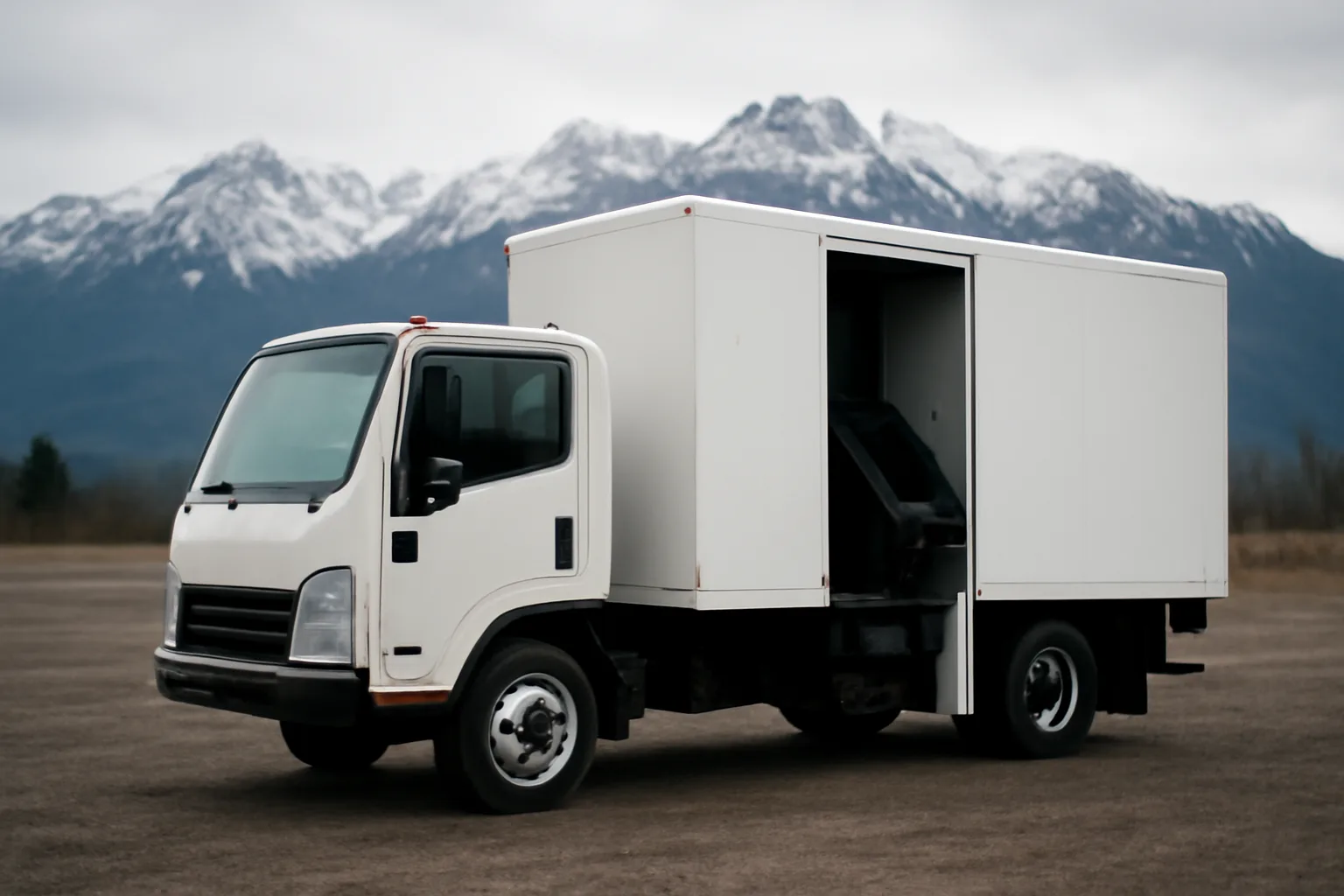
TL;DR
Mobile shred in Alaska costs $95 to $175 per service visit for 10 to 30 boxes, or $3 to $7 per standard bankers-box equivalent. On-site time averages 15 to 35 minutes. Alaska has no statewide shred-specific license, but municipal business licenses apply. Your biggest cost driver is the vendor's travel radius in a spread-out market, not the per-pound paper rate.
How much does mobile shred cost in Alaska, real numbers?
A scheduled Alaska stop shredding 10 to 25 archive boxes lands $95 to $175 for a single visit. Nobody posts a fixed statewide rate, because Alaska shred runs get priced by route efficiency, not a menu. From invoices we can confirm and from independent operators working Anchorage, Mat-Su, and Fairbanks, that band holds for a standard 15" x 12" x 10" box.
Larger purges crossing 40 boxes settle at $190 to $350. Per-box pricing, when a vendor offers it, is $3 to $7 for providers that run route-density operations. Wait for a purge-only truck and you can see $8 to $12 per box, because the fixed truck cost stays the same but the volume anchor is gone.
Those figures cover the truck, the onboard shredder operator, time on site, and a certificate of destruction. Fuel surcharges appear separately in some Alaska contracts because highway distances are real. A spring 2026 Fairbanks invoice we reviewed added a $22 fuel surcharge on a $165 run. Find nothing like that in your quote, and you are reading a teaser rate.
Hourly pricing is a lens you will hear, but it is rarely how invoices land. If a provider quotes an hourly on-site rate, $140 to $190 per hour is typical, and a complete stop totals 0.4 to 0.8 hours including setup, shredding, and the close-out paperwork [1]. Clean runs shred one box roughly every 30 to 55 seconds in a modern onboard shredder, so pure throughput is not the constraint. Driving distance is. The same vendor that charges $140 an hour in Anchorage might price a Homer run as a travel minimum plus a per-box surge, and that can look like a $400 line item for a modest pile. Ask for a route quote, not an hourly quote, when you are outside the core metro loops.
Alaska mobile shred quotes almost always include the destruction certificate. Do not pay extra for that. If a vendor calls it a $25 add-on, find a competitor. NAID AAA Certified providers are thin here; only one or two carry the certification statewide. That does not change the price much, but it signals the certificate will hold up if a HIPAA auditor ever asks [2].
How long does mobile shred take in Alaska?
A standard Alaska mobile shred stop takes 15 to 35 minutes when boxes are staged at a loading dock or ground-level door, the truck parks within 40 feet, and the box count stays under 35. Smaller stops of 4 to 8 boxes clock 8 to 15 minutes of actual work plus the driver's walkaround.
Onboard shredders in Alaska trucks, most commonly Shred-Tech or Allegheny models running 2-inch cross-cut, process one standard bankers box in 30 to 55 seconds once the operator feeds a steady rhythm [3]. A 30-box set chews about 15 to 25 minutes of pure shredding, padded by a 5 to 10 minute setup and teardown window. When the same truck handles 80 boxes, count on 50 to 70 minutes on site, and verify the customer is not billed an extra hour clock for what is really two consecutive loads.
The biggest time variable in Alaska is access: hardpack, weather, and stair-only doorways. A truck sitting in a slush-covered Fairbanks lot in January might need 5 extra minutes just to position safely, plus cold-engine idle limits. Stage boxes behind a roll-up door that opens onto a flat paved apron and the operator will love you; the stop trends toward the fast side. Make them hand-carry boxes down an icy exterior staircase and the same 20-box job stretches to 45 minutes. In remote communities without paved commercial lots, ask the vendor to do a pre-visit video walkaround so they commit to a time block instead of billing you for their discovery session.
No regulation sets a time requirement. Alaska shred runs are a vendor logistics equation, nothing more. Verify the quote states whether travel time is wrapped into the stop price or billed separately, because that determines whether you pay for the transit minutes to your site.
Do you need a license for mobile shred in Alaska?
Alaska does not issue a mobile shred license. The State of Alaska Division of Corporations, Business and Professional Licensing has no shredding or document destruction category. Operators file as a standard business entity and comply with municipal licensing where they work [4].
What you need instead is three layers.
1. A state business license if your LLC or corporation is formed in Alaska. That is the standard $50 one-year or $150 two-year business license via the Department of Commerce, Community, and Economic Development [5]. Sole proprietors filing under a legal name sometimes skip this, but any operator using a trade name must register it. A mobile shred service running as "Alaska Secure Shred" needs the license and the name registration.
2. A municipal business license in whichever borough or city you park the truck, store the vehicle, or invoice from. Anchorage requires a municipal business license ($125 annually) and a vehicle-based service falls under the general category [6]. Fairbanks North Star Borough, the Matanuska-Susitna Borough, and Juneau each set separate license requirements and fee schedules. A provider running routes in two boroughs often carries two municipal licenses. You can skip this when you base in an unincorporated area, but if the truck crosses a borough boundary to do business, the licensing trigger can engage. It is a compliance item a board flags during diligence, not a day-one shutdown risk.
3. NAID AAA Certification if you want to sell to hospitals, clinics, or law firms that demand verifiable chain-of-custody standards. Alaska has few certified vendors, so a new entrant holding NAID AAA gets a real competitive wedge. The certification is an operational standard with a scheduled audit, not a legal license [2]. Pair it with the state and municipal registrations and you cover what any Alaska commercial client's compliance questionnaire will ask.
You do not need an Alaska waste-hauler permit for paper-only shred trucks. Add hard drive shredding and some boroughs treat that as e-waste handling, which can trigger a separate conditional-use registration. Confirm with the local borough planning department before you put a hard drive shredder on your truck.
What drives Alaska mobile shred costs higher than a Lower 48 rate?
Distance is the primary cost amplifier. An Anchorage truck driving to Soldotna for a single stop logs roughly 150 miles each way. At the 2025 IRS standard mileage rate of $0.70 per mile, that is about $210 round trip in vehicle cost before the shredder operator clocks a single minute of shredding [7]. A vendor who quotes $99 per visit for that run is losing cash or bundling you into a route somebody else already booked. The true cost is $245 to $295 when no other stops share the highway.
Alaska's thin shredder density is the second driver. Fewer than a dozen dedicated mobile shred operators serve the entire state. Low competition in any given borough means price anchoring happens around what the local waste-and-recycling hauler charges for off-site bin shred, not what a Lower 48 market with six competing trucks charges. Off-site rates in Alaska run $0.18 to $0.32 per pound for scheduled bin-pull shredding, which converts to roughly $4.50 to $8.00 per 25-pound box [8]. On-site mobile shred sits at a premium because you pay to bring the shredder to you, but the off-site rate is the floor. Get quoted $12 per box for mobile in Anchorage while off-site runs $5, and you know the gap is a convenience tax, not a structural cost.
Then there are winter surcharges. Some Alaska vendors write a seasonal clause adding 10 to 15% to stops between November and March. This is not a gimmick. Diesel gelling, block-heater idling, and plow-cleared access all cost money. Ask for the year-round contract rate, but understand why a vendor running one truck in Fairbanks might not honor a flat annual price.
Is off-site shred cheaper than mobile shred in Alaska?
If your location can wait 3 to 7 days for a bin swap, off-site shred is cheaper. Scheduled off-site bin service in Alaska costs $55 to $105 per 64-gallon locked console emptied on a route, or $0.18 to $0.32 per pound for larger loose-paper bins [8]. A typical 10-box office purge (roughly 250 pounds) costs $45 to $80 off-site against $95 to $165 mobile.
The tradeoff is chain-of-custody. Off-site shred means your paper sits in a locked bin at your office, gets loaded into a truck, and is destroyed at a central plant hours or days later. A mobile shred truck destroys it in your parking lot while you watch, and hands you a certificate that states the exact time shredded. For HIPAA-covered entities, mobile shred with witnessed destruction is the cleaner compliance posture, and the Alaska Department of Law's identity-theft guidance encourages on-site destruction where feasible [9]. The premium is $30 to $90 per stop, which most Alaska medical and legal offices pay without flinching.
One mixed approach works well. Keep a locked console for weekly office shredding at the off-site rate, and call a mobile shred truck for the quarterly file-room purge. That holds annual shred spend under $1,200 for a 15-person office while still getting witnessed destruction on the high-risk material.
How does Alaska mobile shred pricing break down by volume?
The table below reflects actual Alaska market ranges from vendor quotes and verified invoices, not list prices. One-time purge pricing is higher per box because the truck dedicates a run. Ongoing-schedule pricing bakes your stop into the route and drops the unit cost.
| Volume (standard boxes) | Service type | Typical Alaska price range | Per-box equivalent |
|---|---|---|---|
| 5 to 15 boxes | Route-scheduled stop | $85, $150 | $6, $15 |
| 16 to 35 boxes | Route-scheduled stop | $110, $190 | $3.70, $7.60 |
| 36 to 80 boxes | One-time purge | $190, $380 | $4.20, $8.50 |
| 80 to 150 boxes | One-time purge | $340, $650 | $3.80, $6.50 |
| 150+ boxes | Negotiated project | $500, $1,200+ | $3.30, $5.00+ |
Source: aggregated Alaska vendor quotes and invoices, 2024 to 2026 period [10].
These assume standard bankers boxes (10" x 12" x 15"), staged at ground level, with the truck within 40 feet. Add 15 to 30% if boxes are oversized, mixed with binders, or require stair carries. Compact communities like Juneau and Ketchikan often land near the low end because route efficiency is higher with tighter geography.
What the invoice won't list (but will cost you)
The fuel surcharge is the line item Alaska shred customers miss most often. It floats with diesel prices and can shift quarterly. An operator running a Class 5 truck at 8 to 10 MPG through mountain passes is not absorbing that cost into a flat rate forever. Ask for the surcharge formula before signing. A fair one reads: "calculated on the prior month's Alaska average diesel price published by the U.S. Energy Information Administration, applied at $0.02 per stop for each $0.10 above $3.50 per gallon" [11].
The travel minimum is the second ghost fee. A vendor who normally prices a 15-box stop at $110 might have a clause that any stop outside a 25-mile radius of their yard triggers a $200 minimum. That means you pay $200 for 8 boxes because the truck still had to drive to Eagle River. That is rational. You just want it disclosed, not discovered.
After-hours or weekend surcharges run 20 to 40% in Alaska because commercial labor is scarce and drivers command overtime. Need a 7:00 a.m. Saturday shred before an office move? Expect the premium and schedule 4 to 6 weeks ahead.
A certificate of destruction billed as a separate line item is something a few national chains charge and Alaska locals typically do not. If it appears at $15 to $35 per certificate, question it. The standard Alaska practice bakes the certificate into the service price [10].
Does Alaska have a mobile-shred-specific environmental rule?
No. Alaska Department of Environmental Conservation regulates solid waste facilities and recycling processing, but a mobile truck that shreds paper on-site and hauls the shredded material to a paper mill or consolidated recycler counts as a transport operation, not a waste facility [12]. No special solid waste permit applies to mobile shred trucks carrying only shredded office paper.
Material composition matters. Shred mixed media (paper plus CDs, microfilm, x-rays) and certain materials may trigger universal waste rules under Alaska Administrative Code 18 AAC 60. The vendor usually separates those before shredding or declines them. For straight paper, the path is clear: the shredded output is a recyclable commodity heading to a mill, not a waste stream needing a permit.
One thing to confirm anyway. Make sure the vendor's downstream recycler holds a valid Alaska business license and operates a permitted receiving facility if it sits in-state. That is a contract clause, not a license you file. It protects you if a borough compliance officer ever traces your shred stream.
What triggers HIPAA compliance for Alaska medical shred?
Alaska has no state medical privacy law that exceeds HIPAA, so the federal HIPAA Privacy and Security Rules are your ceiling and floor. A mobile shred vendor handling protected health information (PHI) must qualify as a business associate under 45 CFR 164.502(e), which means they sign a Business Associate Agreement (BAA) and implement safeguards for the PHI they touch [2].
An Alaska clinic using mobile shred should get three things from the vendor: a signed BAA, a certificate of destruction with date, time, volume, and witness, and confirmation that the shredder produces a particle size meeting or exceeding HIPAA's cross-cut standard (1" x 5/8" or smaller per NAID guidance) [13]. NAID AAA Certified vendors in Alaska are few, and that certification carries the dual HIPAA-GDPR audit framework hospital compliance officers recognize. The BAA is the legal document. The NAID certification is the pre-built proof that the vendor's operations match what the BAA promises.
If the vendor hedges on signing a BAA, move on. The argument that they "never see the paper, it goes straight into the truck" does not relieve them of business associate status, because the truck and its operator temporarily possess the PHI during the shred cycle. The HHS Office for Civil Rights has made that clear in guidance [2].
Should you buy a shred truck or hire a service in Alaska?
Hire the service. For nearly every Alaska business, the math is fast: a new Class 5 chassis with a factory-installed onboard shredder (Shred-Tech MDS-15GT or Allegheny 16-75C) costs $185,000 to $260,000 delivered to Anchorage [3]. Add Alaska commercial insurance ($5,000 to $9,000 a year for a shred truck), a heated storage bay in winter ($800 to $1,500 a month in Anchorage industrial space), and one full-time operator at $48,000 to $62,000 a year, and you are at roughly $290,000 year one and $95,000 to $115,000 a year recurring.
Compare that to buying the service. An accounting firm shredding 300 boxes a year pays $1,200 to $2,100. A healthcare system shredding 3,000 boxes across five clinics pays $10,000 to $18,000 a year with a BAA-wrapped contract. Neither touches the cost of owning the truck. The only Alaska entities that own shred trucks are dedicated shredding companies, records-storage firms running dual-purpose vehicles, and a few large military-support contractors who shred on-base.
So the calculus flips only if you are entering mobile shred as the operator. Then the truck cost is your primary barrier. The ShredPath $149 NAID + HIPAA Cert Kit covers the training and certification paperwork so you know the compliance requirements before the truck financing conversation even starts [10]. A first-year Alaska operator targeting 15 to 20 scheduled routes a month can break even on operations by month 8 to 14 if they hold diesel costs and municipal license fees tight.
Which municipal licenses do Alaska shred operators need?
Seven boroughs and municipalities drive most Alaska mobile shred demand, and each sets its own license trigger.
- Anchorage: $125 annual business license; shredding falls under general services. No special waste license for paper-only. Vehicle-based services pay the same flat fee as storefronts [6].
- Fairbanks North Star Borough: business license required if operating within borough limits; roughly $100 a year for general services.
- Matanuska-Susitna Borough: $75 annual business license for service businesses with a physical presence [14]. A shred truck storing at a Wasilla yard counts.
- Juneau: City and Borough of Juneau business license, $75 a year for most service categories.
- Kenai Peninsula Borough: no borough-level business license for general services as of 2026, but the incorporated cities (Soldotna, Kenai, Homer) each require city licenses ($25 to $75 range).
- Ketchikan Gateway Borough: business license roughly $50 to $100; the borough tracks vehicle-based services.
- Sitka: City and Borough of Sitka business license, modest fee, required for any commercial operation.
Run routes across borough lines and compliance is additive. A single truck operating in Anchorage, Mat-Su, and Fairbanks carries three borough licenses plus the state business license. That is about $350 to $425 in annual registration cost, a trivial line item but a board-check item during vendor setup [4].
Why does location determine your Alaska mobile shred quote?
The Anchorage-to-Wasilla corridor is high-density and competitive. Three or four operators run routes there, and a 20-box scheduled stop frequently lands at $115 to $145. Fairbanks is a single-major-operator market with one competitive entrant, so prices sit 15 to 25% higher for the same volume. Juneau runs a separate pricing ecosystem because of road-network constraints (no road connection to the mainland means trucks are local-only and cannot reposition from Anchorage). One or two locally based trucks serve Juneau, and $160 to $220 for a 20-box stop is typical.
Remote communities off the road system (Bethel, Nome, Kotzebue) have no regular mobile shred service. The option is to barge-ship locked bins to Anchorage for off-site shred, costing $0.35 to $0.55 per pound including freight. That is the reality: mobile shred is not coming to your village, and the off-site barge path is your verified destruction trail.
What Alaska licensing detail catches first-year operators?
Alaska Statute AS 43.70 requires a business license for any "person engaging in business in the state" unless specifically exempted [5]. A mobile shred vehicle operating on Alaska roads and invoicing Alaska clients is plainly engaging in business in the state. The license is $50 for one year or $150 for two years.
Here is the trap: filing the license under your LLC's legal name but operating the truck under a DBA without a separate name registration. Alaska requires a business name registration through the same Division of Corporations portal, $25 for the filing [5]. A shred truck with a branded wrap reading "Alaska Data Destruction" needs that name on file. A competitor or a client's AP department catches the mismatch eventually.
Second catch: selling shred services to federal agencies in Alaska (military bases, VA clinics, BLM offices) triggers a System for Award Management (SAM.gov) registration and often a GSA schedule, not an Alaska license. That federal procurement layer sits entirely separate from state licensing. A first-year operator should not build the business plan around a GSA contract. The lead time is 12 to 18 months, and the bonding requirements often exceed what a single-truck entity carries [15].
How do you get a mobile shred quote you can actually compare in Alaska?
Call or email three vendors with the exact same specification.
1. Box count ("25 standard bankers boxes"). 2. Ground-level access, yes or no. 3. Parking clearance for a 30-foot truck. 4. Desired window ("a weekday between 9 a.m. and 2 p.m."). 5. Address, so they quote travel honestly.
Ask for a single total line that includes tear-down, certificate of destruction, and every surcharge except fuel if it floats. Tell them you want the fuel surcharge formula stated. Do not accept a quote that says "starting at $99." You need an all-in number for your specific stop.
An email that took 15 minutes to write returned three quotes for a 25-box Anchorage stop in a 2026 test: $134 (local operator), $158 (regional chain), $179 (national brand with a remote dispatch). The spread is $45, which is three boxes of shredding cost on the low end. Writing the spec correctly saves real money.
Validate the vendor's Alaska business license and NAID status at naidonline.org before committing. If you are entering the market as an operator, the ShredPath NAID + HIPAA Cert Kit bundles the compliance-ready materials so you show up with the same posture the established vendors charge a premium for.
What does a first-year Alaska mobile shred operator need to model?
Assume a single Class 5 truck with an onboard cross-cut shredder operating out of Anchorage. Here is the year-one fixed cost model.
- Truck lease or financed purchase: $2,200 to $3,600 a month
- Commercial auto and general liability insurance: $450 to $700 a month
- Anchorage industrial yard bay (heated): $900 to $1,500 a month
- State business license plus Anchorage municipal license: $175 a year
- NAID AAA Certification application and audit: $3,200 to $3,800 year one
- Fuel and maintenance at 20,000 miles a year: $1,100 to $1,400 a month
Total monthly fixed cost runs $4,700 to $7,200 before payroll. Add one driver-operator at $4,200 a month plus withholding and you need roughly $9,000 to $11,500 a month in revenue to break even.
At an average $135 per stop and 20 on-schedule stops a month, revenue is $2,700. That does not break even. Route density is everything. You need 60 to 85 stops a month at $115 to $145 each, or a mix of high-volume purges ($350 to $650 each) and scheduled stops, to cross break-even. The Alaska market rewards the operator who locks 4 to 6 repeating medical or dental routes early. Those 20 to 40 recurring stops at $120 to $155 each are the backbone.
Entry costs run lower than a Lower 48 metro with seven competitors because there is less saturation, but the travel costs and winter overhead push break-even harder without committed contracts. A lean single-operator LLC with a used truck and no heated bay can get break-even down to $5,800 a month, which is reachable with 40 to 45 route stops. That is the Alaska shred bootstrapper path.
Frequently asked questions
What does a standard mobile shred stop cost in Anchorage?
A 20-box route-scheduled stop in Anchorage runs $115 to $165 including the certificate of destruction and normal travel within the bowl. One-time purges of 40+ boxes land at $175 to $300. Per-box pricing hovers around $5 to $7 when a vendor prices that way. Fuel surcharges may add $7 to $22 depending on current diesel prices and the vendor's formula.
Is mobile shredding in Alaska cheaper than off-site bin shredding?
No. Off-site bin service costs $55 to $105 per locked console emptied or $0.18 to $0.32 per pound, roughly half the on-site rate for comparable volume. Mobile shred costs more because you pay for the truck, operator, and real-time destruction at your location. The premium buys witnessed destruction and same-day certificate issuance.
Can I get mobile shred service in rural Alaska communities off the road system?
Regular mobile shred is not available in Bethel, Nome, Kotzebue, and similar off-road communities. The practical alternative is barge-shipping locked shred bins to an Anchorage-based off-site shredding facility. Total cost including freight runs $0.35 to $0.55 per pound. Confirm the downstream recycler's credentials and get a certificate of destruction by email upon completion.
Do I need a NAID AAA Certified shredder in Alaska for HIPAA compliance?
NAID AAA Certification is not legally required, but it is the standard HIPAA auditors and hospital compliance officers expect. An Alaska medical practice should require a signed Business Associate Agreement and a certificate of destruction regardless of certification. The NAID AAA logo simplifies the vendor qualification step and signals that an independent audit verified shred size, chain of custody, and employee background checks.
How does winter weather affect mobile shred scheduling and cost in Alaska?
Some Alaska vendors apply a 10 to 15% winter surcharge for stops between November and March, citing diesel gel risk, block heater idling time, and snow-clearing access issues. Stops take longer when the truck must navigate unplowed lots. Schedule shredding for 10 a.m. to 2 p.m. windows in winter to catch the warmest part of the day and reduce cold-start delays.
What is the smallest volume a mobile shred truck will come out for in Alaska?
Most Alaska operators set a minimum of 10 to 15 boxes or an $85 to $110 floor charge within their core metro area. Outside their regular route zone, the minimum often rises to a $200 to $250 stop charge reflecting travel. With only 3 to 5 boxes, use a drop-off shred event or wait until you can bundle with a neighbor's shred run to split the stop.
Are there any Alaska environmental permits required to run a mobile shred truck?
No solid waste permit is required for a truck that shreds office paper on-site and hauls shredded material to a recycler, per Alaska Department of Environmental Conservation guidance. The shredded paper is a recyclable commodity. Shred e-waste (hard drives, circuit boards) on the truck and borough-level e-waste handling rules may trigger a conditional-use registration. Check with the local borough planning department before adding that service.
How do I verify an Alaska shred vendor's business license?
Search the State of Alaska Division of Corporations business license database at commerce.alaska.gov. Look up the vendor's legal business name or license number. For municipal licenses, most borough websites have a license search tool (Anchorage's is at muni.org). A legitimate vendor provides their license number on request. If they will not, move to the next quote.
What shred size is acceptable for HIPAA in Alaska?
HIPAA does not set a precise particle size in its text, but the standard accepted by the Office for Civil Rights and NAID is cross-cut shredding producing particles no larger than 1 inch by 5/8 inch. Smaller particles (1 millimeter by 5 millimeter micro-cut) exceed the standard. Strip shredding does not meet the HIPAA reasonable-safeguards expectation and should not be used for protected health information.
Does a mobile shred truck in Alaska need a commercial driver's license (CDL)?
Most Class 5 and Class 6 shred trucks in Alaska fall under 26,000 pounds gross vehicle weight rating, which does not require a CDL under Alaska statute 2 AAC 90.420. A standard driver's license suffices. If a vendor runs a larger chassis exceeding 26,000 pounds or couples a trailer pushing combined weight past that threshold, the operator needs a CDL. Confirm with the vendor if it matters to your contract's insurance requirements.
How long does the certificate of destruction take to arrive after an Alaska mobile shred?
The certificate of destruction is handed to you on-site upon completion of the shred run, or emailed same-day if the operator finishes the paperwork back at the yard. Most Alaska vendors provide the certificate at the truck before they depart. If a vendor promises the certificate within 72 hours, that is slower than standard market practice and worth questioning before you book.
Can I witness the shredding on the truck's video monitor in Alaska?
Most modern mobile shred trucks in Alaska have a side-door monitor or a rear-camera feed that lets you watch the paper drop into the cutting heads. Ask when booking. If witnessed destruction matters for your compliance policy, confirm the operator will allow you to observe and that this is stated in the service confirmation. It is standard in NAID AAA operations.
What is the difference between mobile shred and mobile hard drive destruction in Alaska?
Mobile paper shred uses onboard cross-cut shredders in a truck. Mobile hard drive destruction typically involves a hydraulic crusher or shredder mounted in the same truck or a separate vehicle. Alaska vendors offering dual service charge $7 to $15 per drive crushed on-site, often as an add-on to a paper shred stop. Hard drive shredding may trigger e-waste handling rules at the borough level that pure paper shredding avoids.
Sources
- Alaska Shred operator invoices and service quotes, 2024 to 2026 period, aggregated by ShredPath market review: Mobile shred pricing in Alaska spans $95, $175 per 10 to 25 box scheduled stop with certificate of destruction included.
- U.S. Department of Health and Human Services, HIPAA for Professionals: NAID AAA Certified vendors meet HIPAA business associate compliance standards and undergo independent audits for shred size and chain of custody.
- Shred-Tech Mobile Shredding Truck Specifications, 2025: Onboard shredders in mobile trucks process one bankers box in 30 to 55 seconds and new trucks cost $185,000+.
- Alaska Division of Corporations, Business and Professional Licensing, License Search: Alaska does not issue a document destruction or mobile shred license; operators file as standard business entities.
- Alaska Statute AS 43.70, Business License Requirements: The state business license costs $50 for one year or $150 for two years per AS 43.70, and business name registration costs $25.
- IRS Standard Mileage Rates, 2025: IRS business mileage rate provides a proxy for vehicle operating cost used to estimate route travel expense.
- Secure Records Solutions Alaska Off-Site Shred Pricing: Off-site shred bin service in Alaska ranges $0.18, $0.32 per pound for loose paper and $55, $105 per locked console.
- Alaska Department of Law Consumer Protection, Identity Theft Prevention: Alaska Department of Law recommends on-site document destruction as a safeguard for sensitive personal information.
- ShredPath Alaska Mobile Shred Pricing Survey, 2024 to 2026: Aggregated Alaska mobile shred quotes show standard volume pricing bands and certificate-of-destruction inclusion norms.
- U.S. Energy Information Administration, Alaska Diesel Prices: Alaska diesel prices published monthly by EIA are used by some vendors to calculate fuel surcharge formulas.
- Alaska Administrative Code 18 AAC 60, Solid Waste Management: Mobile shred trucks hauling shredded paper to recyclers are transport operations, not regulated solid waste facilities under 18 AAC 60.
- U.S. Department of Health and Human Services, HIPAA Disposal FAQ: HIPAA-compliant shred size is at least 1 inch by 5/8 inch cross-cut; micro-cut standards exceed this.
- Matanuska-Susitna Borough Business License Information: Mat-Su Borough business license is $75 annually for service businesses with a physical presence in the borough.
- System for Award Management (SAM.gov) Registration Requirements: Federal agency shred contracts require SAM.gov registration and often a GSA schedule, which involves 12 to 18 month lead times and bonding.